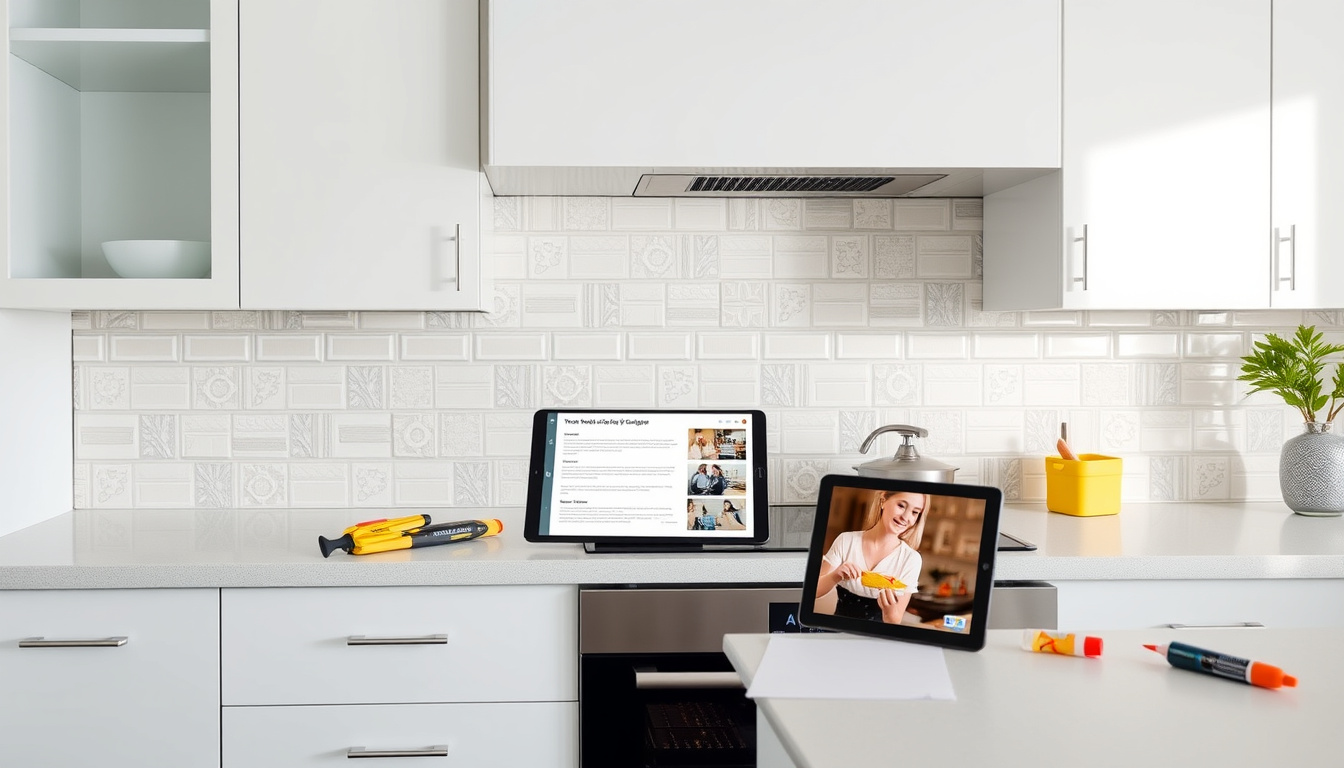
A kitchen backsplash is not only a practical feature that protects your walls from spills and splashes, but it’s also an opportunity to showcase style and personality within your kitchen. Whether you opt for traditional ceramic tiles, sleek glass, or rustic stone, installing a backsplash can dramatically enhance the aesthetic appeal of your space.
If you’re considering a DIY project or aiming to understand the professional installation process, this guide will walk you through the essential steps for a successful backsplash installation.

1. Gather Your Materials and Tools
Before diving into the installation process, ensure you have all necessary materials and tools. Common items include:
- Tiles: Choose your desired tile material (ceramic, glass, stone, etc.).
- Mortar: Thin-set mortar is a standard choice for most tile installations.
- Grout: Select between sanded or unsanded grout based on the size of your tile joints.
- Backer Board: Optional, but recommended for moisture resistance.
- Tile spacers: For maintaining consistent gaps between tiles.
- Tools: Tile cutter, notched trowel, grout float, sponge, level, and safety goggles.
2. Measure and Prepare the Wall
Start by accurately measuring the area you plan to tile. Consider any outlets or switches that may alter the layout. To calculate the total square footage:
- Measure the width and height of your backsplash area.
- For irregular spaces, divide the area into sections, measure, and sum up all the sections.
- Always add an extra 10% to cover potential mistakes or damages.
Once measured, clear the area by removing any appliances or items from your countertop, and lay down drop cloths to protect surfaces.
3. Wall Preparation
Prepare the wall for tile application. If there’s existing tile, carefully remove it using a hammer and chisel. Clean the surface thoroughly, ensuring it is free of dust and debris. If using a backer board, cut and attach it to the wall, ensuring a water-resistant option if your backsplash will be near sinks or high-moisture areas.
4. Cutting Tiles
Most installations require tiles to be cut to fit around edges and outlets. Use a tile cutter for straight cuts or tile nippers for intricate shapes. If you’re cutting natural stone tiles, a wet saw might be necessary to avoid chipping.
5. Applying Mortar
Mix the mortar following package instructions, typically combining water with the thin-set powder. Spread a thin layer of mortar onto the wall using the flat side of a notched trowel, then go back over it with the notched side to create ridges for better adhesion.
6. Laying the Tiles
Starting from your marked center point or the most prominent section of the wall, begin laying the tiles. Place tile spacers between each piece to maintain even gaps. Press each tile firmly into the mortar, giving them a slight wiggle to ensure a solid bond. Use a level frequently to check that your tiles are even.
7. Allowing Mortar to Set
Once all tiles are laid, allow the mortar to dry according to the manufacturer’s instructions, typically around 24 hours.
8. Grouting
After the mortar has cured, it’s time to apply grout. First, remove any tile spacers and clean the tiles with a damp sponge. Mix the grout and apply it with a grout float, carefully pushing it into the spaces between the tiles. Use a damp sponge to wipe off excess grout from the tiles while it’s still wet.
9. Finishing Touches
Once the grout has dried (usually a few days, but check the packaging), you can seal it if necessary, especially with natural stone or when using a darker grout to prevent staining. Refit outlet covers and reconnect any appliances removed during installation.
Conclusion
Backsplash installation can significantly update your kitchen’s look while being a rewarding DIY project. With proper planning, the right tools, and detailed attention to each step, you can achieve a professional-quality result. Whether you decide on a DIY approach or opt for professional help, a well-installed backsplash will enhance your kitchen’s functionality and appeal for years to come.