Living in a small space can often feel overwhelming, especially when trying to balance aesthetics and functionality. However, with the right design strategies, you can transform even the most cramped quarters into spacious sanctuaries. Here are twelve innovative design tips that will help you maximize your small area, creating the illusion of more space while ensuring comfort and style.
1. Embrace Multifunctional Furniture
Investing in multifunctional furniture is crucial when dealing with small spaces. Each piece should ideally serve more than one purpose. Opt for storage solutions that double as furniture, such as bench seats with hidden compartments, expandable dining tables, or sofas with storage under the cushions. This way, you can keep your belongings organized without sacrificing style.
2. Stay Organized
Keeping your small space tidy is one of the simplest ways to make it feel more open. Clutter can quickly make a room seem smaller. Aim for intentional organization: designate specific areas for items and regularly declutter. Implement a rotating display for decor to prevent overcrowding, mixing open and closed shelving to strike a balance between accessibility and aesthetics.
3. Choose Light Wall Colors
Wall color significantly impacts how spacious a room feels. Light colors, particularly white or neutral pastels, can make a room feel open and airy by reflecting light. They create a seamless backdrop that encourages the eye to appreciate the entire space. For an added effect, paint trim and skirtings a lighter shade to enhance the illusion of depth.
4. Implement Accent Walls
Consider adding an accent wall to draw attention to a focal point in the room while allowing other areas to remain serene. Choose bold yet simple patterns or colors that won’t overwhelm. This technique can make spaces feel larger by breaking up the visual plane without closing off areas.
5. Use Mirrors to Create Illusions
Mirrors are powerful tools in small spaces, as they effectively reflect light and create an illusion of depth. Position a large mirror opposite a window to bounce light around the space, or choose tall, slender mirrors that draw the eye upward, enhancing the feeling of height.
6. Opt for Smaller, Low-Profile Furniture
Oversized furniture can overpower small rooms. Instead, select smaller, low-profile pieces with legs to allow light and air to flow beneath them, which contributes to a more open feel. Consider furniture alternatives, like using side tables instead of coffee tables, to maximize space efficiency.
7. Incorporate Round-Shaped Furniture
Round furniture provides a softer look in small spaces, eliminating harsh lines that block visual flow. Tables without corners take up less space and create a more inviting atmosphere.
8. Allow for Space Between Furniture
While it may seem counterintuitive, leaving enough space between furniture is essential for maintaining a sense of openness. Aim for 45 to 60 centimeters between pieces to facilitate movement. If possible, angle furniture away from walls to create more interesting and spacious arrangements.
9. Highlight Vertical Elements
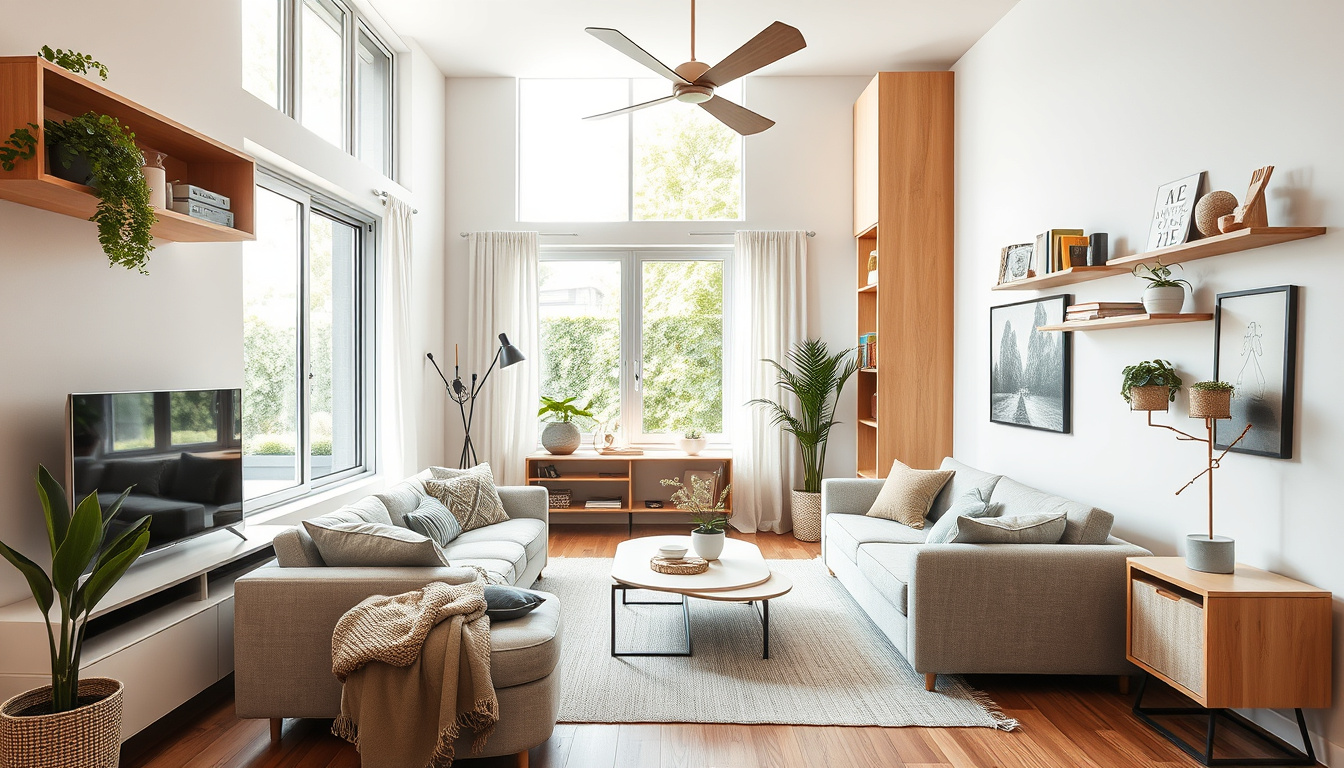
In small areas, drawing attention to vertical lines can create the illusion of height. Utilize tall shelving, vertical wall panels, or hanging light fixtures to elongate the space visually. This makes the room feel larger and draws the eye upwards.
10. Choose Blinds Over Curtains
Maximizing natural light will enhance your space’s openness. Blinds create a clean look and can be rolled up fully, whereas curtains can block light and appear cluttered. For a seamless aesthetic, choose blinds in a color that matches the walls.
11. Layer Your Lighting
At night, maintaining a sense of spaciousness is vital. Use layered lighting—overhead, ambient, task, and accent—to illuminate the space without overwhelming it. Slender, stylish lamps and recessed lighting can provide the needed brightness without cluttering your visual landscape.
12. Keep It Minimal and Intentional
Lastly, practice minimalism by being intentional about what you include in your space. Avoid overcrowding with decor and furniture, focusing instead on a select few meaningful items that enhance your home’s overall ambiance. This approach not only promotes a sense of calm but also reinforces the feeling of openness.
Conclusion
Transforming your small space into a spacious sanctuary is achievable with thoughtful design strategies. By merging functionality with style through multifaceted furniture, organized layouts, and strategic decor choices, you can unlock the full potential of your home. Embrace these twelve tips to create an inviting atmosphere that feels surprisingly expansive, elevating your living experience in even the smallest of quarters.