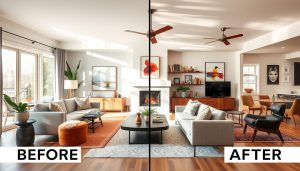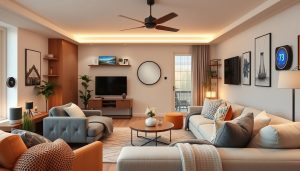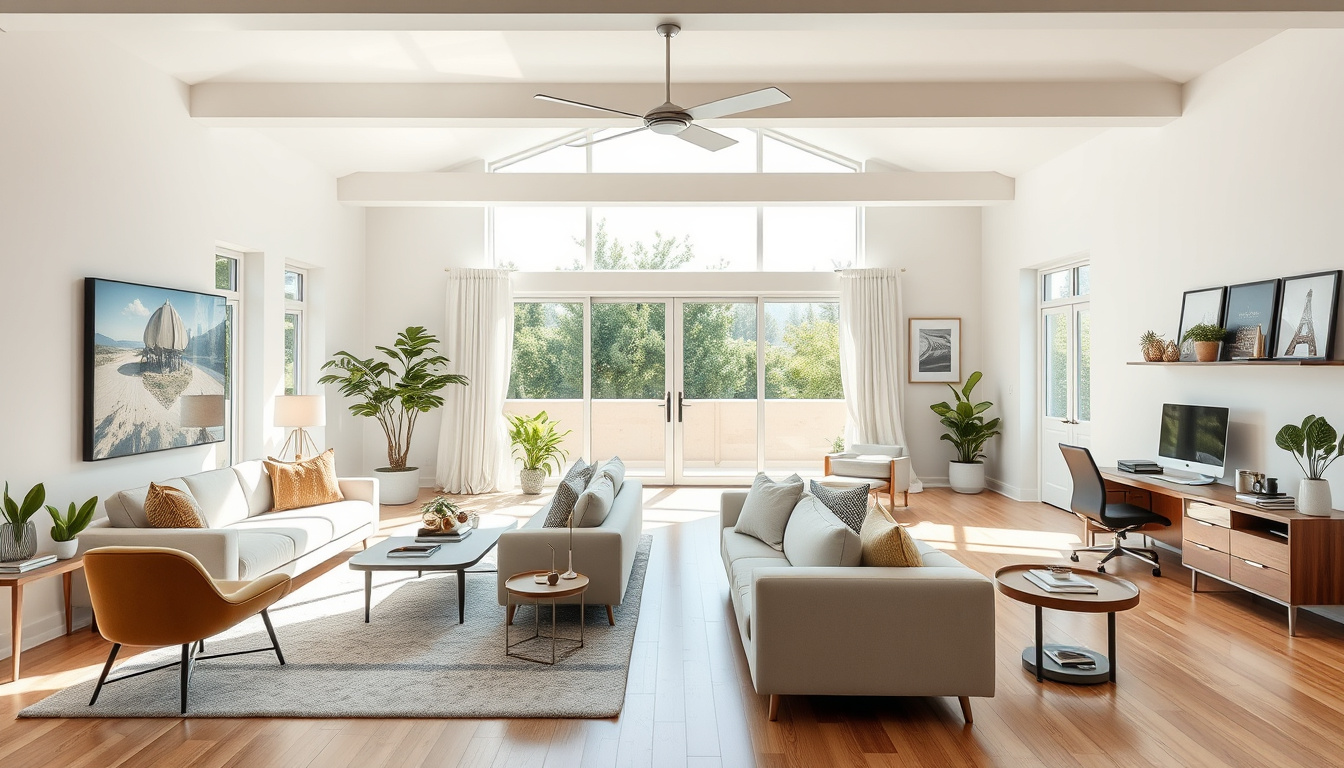
Open floor plans have become synonymous with modern living, providing a sense of spaciousness and flow. However, with this design choice come unique challenges that can make such spaces feel both overwhelming and under-furnished, particularly when it comes to comfort and cohesion. Here, we explore three creative interior design strategies that can transform your open concept home into a stylish and functional haven.
1. Define Spaces with Rugs and Lighting
In an open floor plan, it’s essential to create distinct zones that allow the space to be functional while still feeling connected. One effective way to do this is through the use of area rugs. Rugs can beautifully delineate various spaces, such as the living room and dining area. For larger areas, floating furniture groups on your chosen rugs can create intimate conversational zones, while in smaller setups, it might be prudent to position larger pieces against the walls to avoid a cluttered appearance.
Lighting plays a crucial role here, too. Layering lighting with a mix of overhead fixtures, such as statement chandeliers or pendant lights over dining tables, can create focal points that visually segment spaces. Think of the chandelier as the star of your design, complemented by supporting pendant lights elsewhere, guiding the eye throughout the open layout.
2. Opt for a Cohesive Color and Material Palette
Continuity is key in open floor plan design. A simple color and material palette can significantly enhance visual flow and coherence. Sticking to the same flooring and wall colors throughout the space can unify the areas, while subtle variations in shades or materials can highlight architectural features and add depth. For smaller spaces, consider painting everything in the same tone to create an illusion of expansiveness.
In addition, the repetition of metal finishes and natural textures within your decor adds richness to the overall aesthetic. Aim for a balanced mix of patterns and accent colors to maintain interest without overwhelming the senses. This strategy encourages a seamless transition between spaces, ensuring that while areas serve different functions, they feel cohesively tied together.
3. Infuse Softness and Texture
Creating an inviting atmosphere in an open floor plan is crucial for comfort. Softness can be introduced through various elements, such as upholstered furniture, which not only adds warmth but also absorbs sound—helping to address any acoustical concerns. Incorporating upholstered pieces that double as storage also cleverly tackles the challenge of limited space.
Don’t forget about textiles! Adding throw blankets, decorative pillows, and leafy plants enriches the visual texture and provides pops of color, contributing to an aura that feels both warm and inviting. Drapery that closely matches your wall color can enhance this effect while being practical, as they also aid in sound absorption.
By thoughtfully applying these creative strategies—defining spaces with rugs and lighting, maintaining a cohesive color and material palette, and infusing softness with textures—you can transform your open floor plan into a comfortable and aesthetically pleasing environment. With the right design elements, these large or small spaces can be not just open, but also cozy, inviting, and truly reflective of your personal style.